

Section 1 — Aluminum Die Casting Parts Are Not “Parts”, They Are Decisions
When buyers talk about aluminum die casting parts, the conversation often starts with geometry, tolerances, or price.
But in real-world manufacturing, an aluminum die casting part represents something much bigger: a long-term decision about cost structure, supply stability, and product scalability.
Every aluminum die casting part locks in assumptions—about volume growth, tooling ownership, defect tolerance, and even future design changes. Once the mold is built, flexibility drops sharply. That is why experienced buyers treat aluminum die casting parts not as interchangeable components, but as strategic nodes in their manufacturing system.
This shift in mindset is where most projects succeed—or quietly fail.
Section 2 — What Makes Aluminum Die Cast Parts Survive Mass Production (Not Just Prototyping)
Many aluminum die casting parts look perfect at the prototype stage.
Dimensions are accurate, surfaces are clean, and test assemblies pass smoothly. Yet problems often emerge only after mass production begins.
The reason is simple: prototypes are evaluated once, while production parts are tested thousands—or millions—of times.
In mass production, aluminum die cast parts must withstand:
● Thermal cycling inside molds
● Small variations in molten aluminum behavior
● Long-term mold wear and cavity deformation
A design that works for 500 shots may fail at 50,000 shots. This is why experienced aluminum die casting part manufacturers evaluate parts not only by geometry, but by process window stability—how forgiving the design is when conditions inevitably fluctuate.
If a part only works under “perfect” conditions, it is not production-ready.
Section 3 — Customized Aluminum Die Casting Parts Start With Use Scenarios, Not Drawings
Most customized aluminum die casting parts fail quietly—not because the drawings are wrong, but because the drawings are incomplete.
A CAD file rarely explains:
● Where the load really concentrates
● Which surfaces matter for assembly, and which don't
● How the part behaves after years of vibration or heat
Successful customized aluminum die casting parts are developed backwards—from use scenario to structure, not from drawing to mold.
When manufacturers understand how the aluminum die casting part will be mounted, stressed, sealed, or exposed, they can optimize wall thickness, ribs, and draft angles accordingly. This approach reduces unnecessary material, improves reliability, and often lowers total cost—without changing the external design at all.
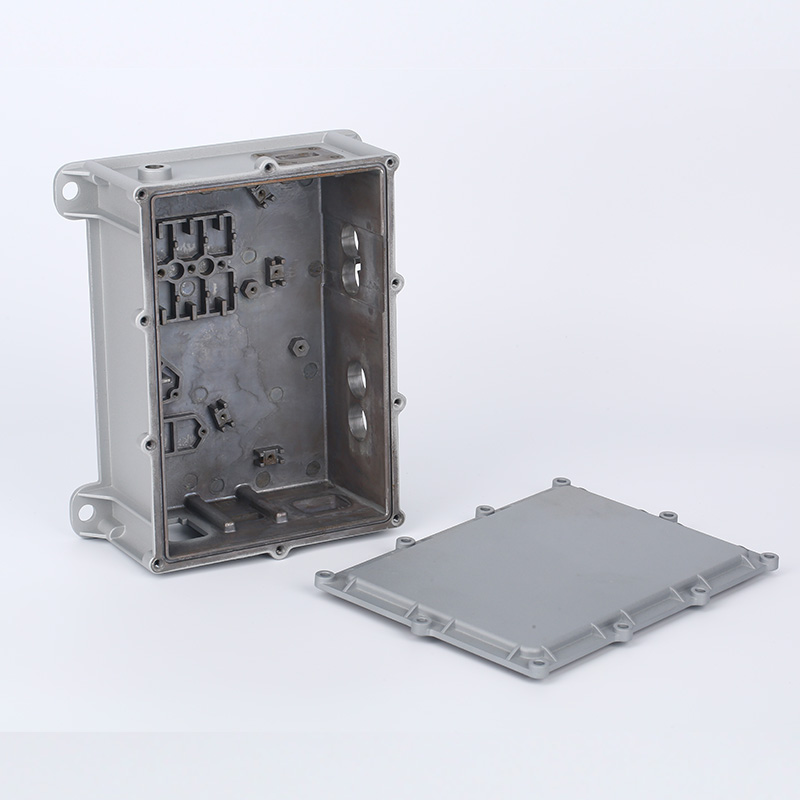
Section 4 — Inside the Mind of a Reliable Aluminum Die Casting Part Manufacturer
A trustworthy aluminum die casting part manufacturer evaluates projects differently from buyers.
While buyers focus on price and lead time, manufacturers think about:
● Mold life expectancy
● Yield stability over time
● Process repeatability across shifts
● Risk of hidden defects
● Long-term cooperation value
When a manufacturer asks many questions early, it is not resistance—it is risk management. The best aluminum die casting part manufacturers aim to prevent future disputes before they happen, rather than reacting after defects appear.
Understanding this mindset helps buyers distinguish between short-term suppliers and long-term partners.
Section 5 — Aluminum Die Casting Parts vs Other Manufacturing Methods: The Unspoken Trade-Offs
Aluminum die casting parts are powerful—but only under the right conditions.
Compared to CNC machining, extrusion, or stamping, aluminum die casting excels in:
● Complex geometries
● Integrated features
● High-volume consistency
However, for low-volume projects, frequent design changes, or extremely tight internal porosity requirements, aluminum die cast parts may not be the best choice.
Smart buyers don’t ask, “Can this be die cast?”
They ask, “Should this be die cast?”
Section 6 — Design Details That Separate Average and High-Performance Aluminum Die Cast Parts
Two aluminum die casting parts can use the same alloy and look identical—yet perform very differently.
The difference lies in:
● Wall thickness transitions
● Rib orientation
● Fillet radii
● Gate and flow balance
A 0.1 mm adjustment in one area can improve filling, reduce stress, and extend mold life. High-performance aluminum die casting parts are rarely “designed once.” They are refined through manufacturing feedback.
Section 7 — From First Order to Long-Term Supply: Scaling Aluminum Die Casting Parts Safely
The first successful order proves feasibility—not sustainability.
Scaling aluminum die casting parts requires:
● Clear mold ownership and maintenance rules
● Controlled process parameters
● Continuous quality data tracking
Reliable aluminum die cast parts suppliers treat scale-up as a managed transition, not a sudden jump in volume.
Section 8 — Real-World Applications That Actually Benefit From Aluminum Die Casting Parts
Aluminum die casting parts perform best when:
● Structural strength and weight reduction matter
● Components must integrate multiple functions
● Volumes justify tooling investment
Automotive housings, communication enclosures, industrial equipment frames, and electronic casings are typical examples—when designed correctly.
Section 9 — How to Evaluate Aluminum Die Casting Parts Before You Commit
Before committing, buyers should evaluate:
● Design robustness
● Manufacturer experience
● Tooling transparency
● Long-term scalability
A low unit price means little if the aluminum die casting parts cannot scale reliably.