

How to solve problems that occur during the use of zinc alloy die-castings
Zinc alloy die-castings are parts produced by pressure casting. They are made by pouring molten zinc or zinc alloy into the feed port of a pressure casting machine equipped with a casting mold. After being die-cast by the die-casting machine, zinc parts or zinc alloy parts with the shape and size restricted by the mold are formed. Such parts are usually called zinc alloy die-castings. So, How to solve problems that occur during the use of zinc alloy die-castings.
For hot cracks: The thickness of the die-cast part should not change sharply to reduce stress generation. Adjust the relevant die-casting process parameters; Lower mold.
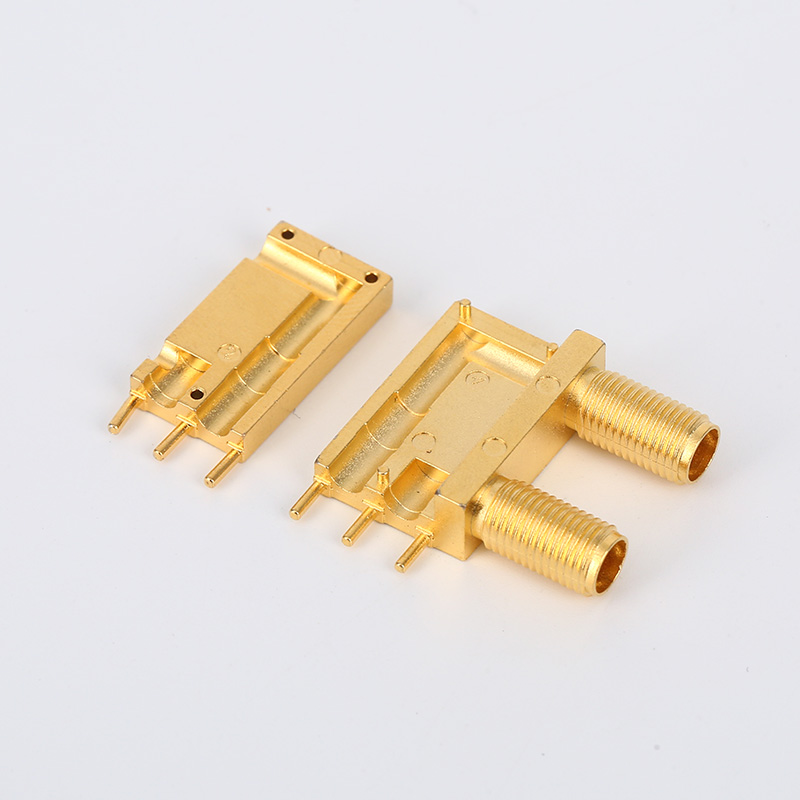
For water marks and cold lap marks: The mold temperature can be raised, the speed of the inner gate can be increased, or the overflow slot in the cold lap zone can be enlarged to reduce the occurrence of cold lap marks.
For intergranular corrosion phenomena: The main approach is to control the content of harmful impurities in the alloy raw materials, especially lead. 0.003%. Pay attention to the impurity elements brought by the waste materials;
For shrinkage cavities: It is necessary to ensure that all parts during the die-casting solidification process dissipate heat as evenly as possible and solidify simultaneously. Shrinkage cavities can be avoided through reasonable sprue design, thickness and position of the inner gate, mold design, mold temperature control and cooling.
Controlling the formation of porosity: The key is to reduce the amount of gas mixed into the casting. The ideal metal flow should continuously accelerate from the nozzle through the sprue cone and runner into the cavity, forming a smooth and consistent metal flow. By adopting a conical runner design, that is, the gate flow should continuously accelerate and gradually decrease from the nozzle towards the inner gate, this goal can be achieved. In the filling system, the gas mixed in forms pores due to turbulence and the mixture with the metal liquid phase. From the study of the simulated die-casting process where the metal liquid enters the cavity from the casting system, it is clearly seen that the sharp transition positions and the increasing cross-sectional area of the runner in the runner will cause turbulence in the metal liquid flow and entrainment of gas. Only a stable metal liquid is beneficial