

Aluminum alloy die-castings are core components in current industrial lightweight manufacturing and are widely used in fields such as new energy vehicles, smart homes, and 5G equipment. Many procurement and engineering practitioners are curious about how aluminum alloy die-castings are produced. In 2026, the upgrading of the manufacturing industry accelerated, and the die-casting industry also witnessed a wave of upgrades featuring refined processes, automated production, and standardized quality. Compared with traditional production models, today's production processes are more rigorous and precise, better meeting the demands of high-end equipment. This is also the core reason for the continuous rise in the market demand for die-casting parts.
1. The initial mold design and preparation determine the basic quality of the product.
The core prerequisite for die-casting production is the mold. The precision and structural design of the mold directly determine the dimensional accuracy and forming effect of die-castings. This is also the first core checkpoint for quality control in the industry in 2026. In the early stage of production, technicians will customize exclusive die-casting molds based on product drawings, application scenarios and performance requirements. They will give priority to using mold steel that is suitable for high-precision production, while also taking into account the characteristics of high temperature resistance and wear resistance. After the design is completed, mold trials and structural optimization will be conducted to identify potential issues such as shrinkage, deformation, and porosity. At present, the industry generally abandons the extensive mold-making mode and uses digital simulation technology to predict production defects, reducing the defect rate in subsequent mass production from the source. This is also the core production standard for high-end die-casting products this year. Before the project is implemented, the company will complete a full set of mold process reviews, optimize the mold structure in combination with the customer's customized requirements, and adapt to the dual demands of small-batch customization and large-batch mass production.
2. Aluminum alloy smelting and pretreatment to ensure the purity of raw materials.
After the mold debugging is completed, the raw material processing stage officially begins. Production personnel put standard aluminum alloy raw materials into the smelting equipment, heat them at a constant temperature to a molten state, and simultaneously carry out degassing and impurity removal treatments. In 2026, the industry will increasingly focus on the refined processing of raw materials. Traditional smelting is prone to residual impurities and gases, leading to problems such as porosity and insufficient strength in the finished products. However, the upgraded smelting process can effectively enhance the purity of molten aluminum, significantly improving the stability and corrosion resistance of the finished products, and meeting the usage requirements of high-end fields such as new energy and precision electronics. After the molten aluminum is melted, it will be kept at a constant temperature and left to stand for later use to ensure uniform temperature during the subsequent injection process and avoid product formation defects caused by excessive temperature differences.
3.High-pressure die-casting forming, core forming process.
Die casting is a key step in the entire production process and also the core link that distinguishes it from ordinary castings. The equipment injects pure molten aluminum into the sealed mold cavity at high pressure and high speed, completing the filling in milliseconds. Subsequently, it rapidly cools down through the built-in cooling system of the mold, allowing the aluminum liquid to solidify and take shape quickly. This year, the mainstream upgrade direction of the industry is automated die-casting production. The entire process is precisely controlled by intelligent equipment for the three core parameters of pressure, speed and temperature. Compared with manual regulation, the parameter error is smaller and the product consistency is higher. Meanwhile, the popularization of vacuum die-casting technology has effectively reduced the residual air inside the cavity, significantly lowered the porosity of the product, and made the mechanical properties of die-castings more stable.
4. Post-processing to refine the details of the finished product.
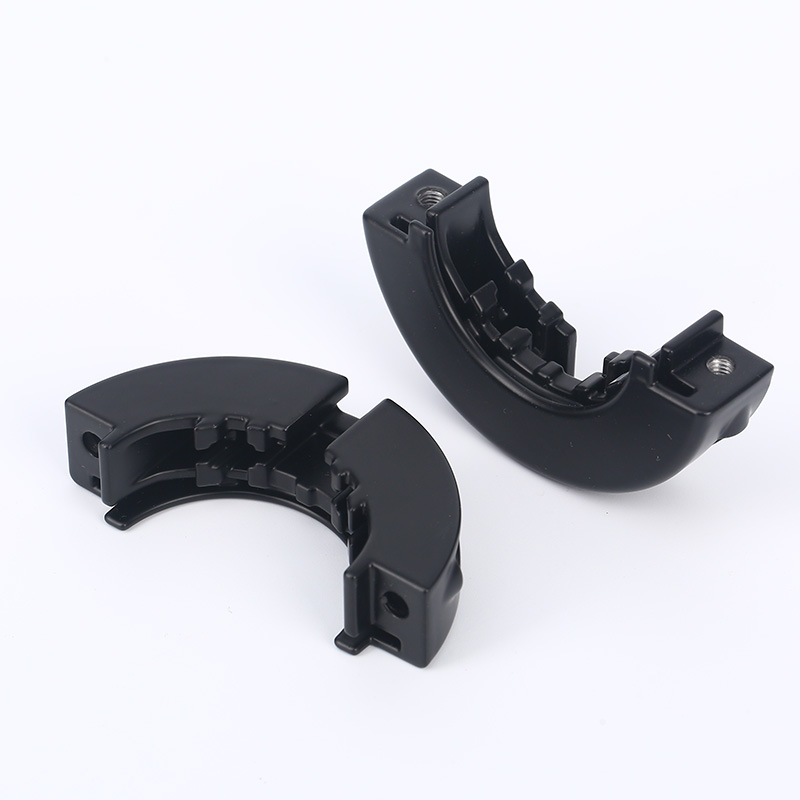
The freshly demolded rough die-castings still contain sprue waste and burrs and flash, and cannot be put into direct use. They need to go through a full set of post-treatment procedures. First, remove the water outlet and excess corners through the punching and cutting equipment, and then carry out grinding and polishing treatment to make the product surface smooth and flat. For products with special requirements, heat treatment, anodizing, spraying and other processes will also be carried out to enhance the hardness, wear resistance and rust prevention ability of the products. In 2026, users will no longer merely focus on the basic forming effect of products, but pay more attention to the precision of details and service life. Therefore, the degree of refinement in post-processing has become an important criterion for distinguishing the quality of die-casting products. Die casting, relying on an automated post-processing production line, can stably control the detailed tolerances of products and meet the processing requirements of various precision components.
5. Finished product inspection and shipment, strictly controlling the quality of delivery.
After all the processing procedures are completed, the final step is the quality inspection stage. The staff will conduct a comprehensive inspection of the products' dimensional accuracy, surface flatness, internal structure, mechanical properties, etc. through precise testing equipment, screen out defective products and retain qualified ones. As industry competition tends to focus on quality, most regular manufacturers have established a full-process inspection system this year to prevent substandard products from entering the market, while ensuring the uniformity of quality for batch products and stabilizing delivery efficiency.
Overall, in 2026, the production of aluminum alloy die-castings has long bid farewell to the extensive processing mode. Relying on digital and automated technological upgrades, it has achieved the production advantages of high precision, high stability, and low cost. This is also the core confidence for it to continuously adapt to the lightweight upgrade demands of various industries.